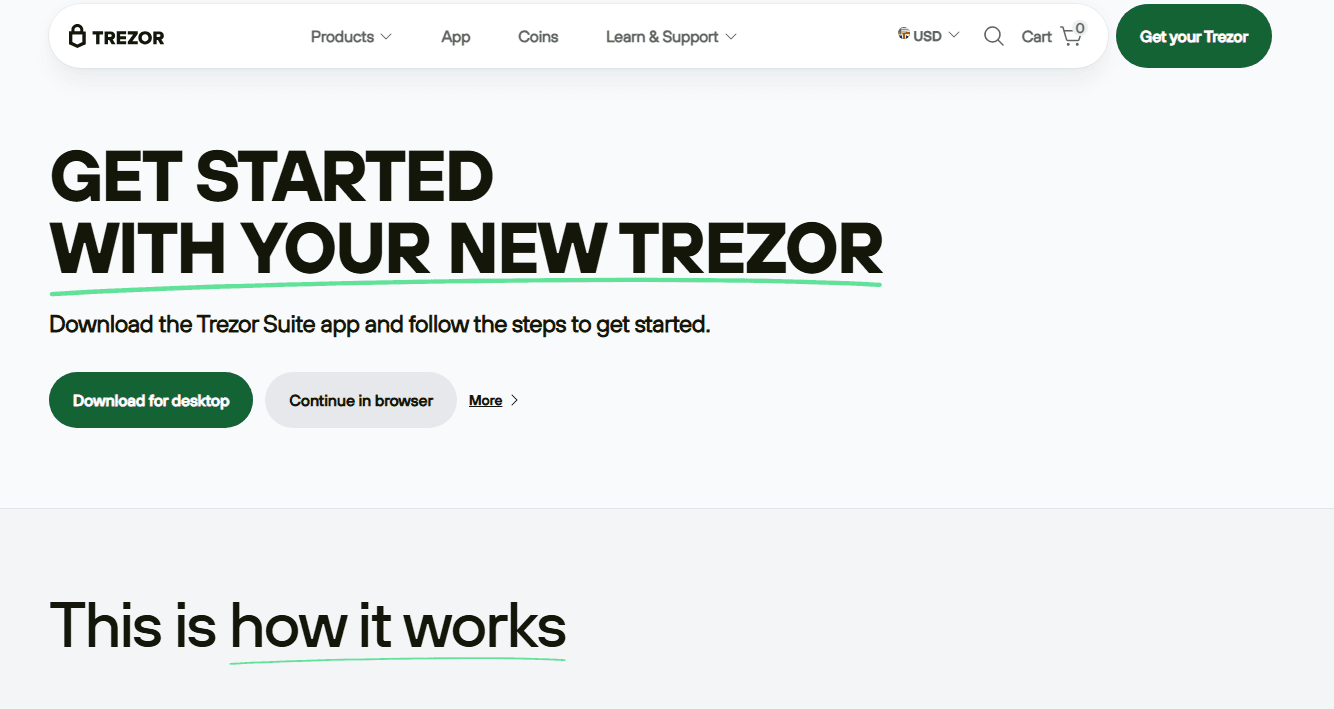
Trezor Login — Complete Guide to Accessing and Securing Your Trezor Wallet
Introduction
“Trezor login” refers to the secure process of accessing your cryptocurrency wallets through a Trezor hardware device. Unlike traditional logins where you enter a username and password, Trezor uses a hardware-based authentication process. This ensures that your private keys remain offline and that only the physical device holder can authorize wallet access. This guide explains how Trezor login works, common steps, security features, and best practices.
What Trezor Login Really Means
A key point most beginners misunderstand is that Trezor does not use a typical online login system. There is no online account, email login, or password. Instead, Trezor login means connecting your hardware wallet and confirming actions physically on the device. Your crypto is not stored in the cloud—it is secured within your hardware wallet and accessed only through authorized interactions.
Connecting Your Trezor Device
To begin the login process, connect your Trezor hardware wallet to your computer using a USB cable. Once connected, the device powers on and displays prompts to proceed. On your computer, open the official Trezor management application. The app will automatically detect your device and request verification. This step acts as the foundation of the login process.
Entering Your PIN
The first layer of authentication after connecting the device is entering your PIN. This PIN is created during the initial wallet setup. Trezor uses a unique and randomized PIN entry grid that appears differently on the device and the app. This prevents attackers from tracking input patterns or guessing your PIN through traditional methods. Without the correct PIN, access to the device is blocked.
Optional Passphrase Login
Users who enable the passphrase feature must enter an additional phrase after the PIN. This passphrase serves as a second form of authentication and generates a completely separate wallet structure. Each unique passphrase opens its own hidden wallet. This makes Trezor login significantly more secure but requires careful handling. Forgetting the passphrase means losing access to the funds in that hidden wallet.
Accessing Your Accounts
Once your PIN (and passphrase, if enabled) is accepted, the Trezor management application loads your accounts and balances. This is the final stage of the Trezor login process. You can now view your crypto holdings, track portfolio performance, and manage your assets. Even though you can see balances on your screen, none of your private keys are ever exposed or stored online.
Confirming Sensitive Actions
Every sensitive action—such as sending cryptocurrency, changing settings, or updating firmware—requires physical confirmation on your Trezor device. This is one of the defining security advantages. Even if your computer is infected with malware, transaction details displayed on the Trezor screen cannot be altered remotely. You must physically press the confirm button on the device to approve any operation.
What If Trezor Login Fails?
If you are unable to log in, there are a few common causes:
Incorrect PIN
Entering the wrong PIN repeatedly increases waiting times between attempts. After too many incorrect attempts, the device may require a full wipe to protect your funds.
Damaged or Missing Cable
Sometimes the issue is simply a faulty USB cable. Try another cable or port.
Outdated Firmware
If your firmware is outdated, the app may not authenticate the device properly. Updating firmware usually resolves this issue.
Missing Drivers
Certain computers may require driver updates to recognize the hardware wallet correctly.
Using Unofficial Apps
Trezor login will not work properly on unauthorized software or third-party websites mimicking official tools.
Logging In Without the Device
A true Trezor login cannot be performed without the hardware wallet. Because private keys never leave the device, there is no online method, backup login, or email-based access. This design prevents attackers from gaining remote access even if they obtain your recovery seed or passphrase information digitally.
Trezor Login Security Features
Trezor uses several built-in protections to keep your login process secure:
Offline Private Keys
Private keys remain offline at all times.
Physical Button Confirmation
Nothing happens without pressing a physical button.
Encrypted PIN Entry
The randomized PIN grid prevents screen-based attacks.
Passphrase Support
Each passphrase opens a hidden wallet for maximum privacy.
Firmware Verification
The device verifies firmware authenticity during every login.
These security layers work together to make Trezor login one of the safest authentication systems in the crypto world.
Best Practices for Safe Trezor Login
To maintain strong security, follow these practices:
Use a strong, unique PIN.
Enable the passphrase feature if you want extra protection.
Never share your recovery seed with anyone.
Keep your device’s firmware updated.
Always use the official Trezor application.
Avoid logging in from compromised or unknown computers.
Store your Trezor in a secure place when not in use.
Consistently applying these habits ensures that every login remains secure.
Final Thoughts
Trezor login is not a typical username-and-password workflow. Instead, it is a secure, hardware-based authentication method that keeps your crypto safe from remote attacks. By understanding how the PIN, passphrase, device confirmation, and offline key storage work together, you can confidently manage and protect your digital assets. With proper setup and responsible use, Trezor login provides one of the most dependable ways to safeguard cryptocurrency holdings.